

Do We Really Want CFB Playoff Expansion?

Welcome to Blue Chip Journal by Adam Breneman - a weekly newsletter from Adam with analysis, hot takes and news on all things college football, NIL, recruiting & sports business.
Subscribe now and join 22,000 other sports fans and share this newsletter with all the college football fans you know!
Thanks for reading Blue Chip Journal! Subscribe for free to receive new posts and support my work.
This email is sponsored by Pikkit: the best sports betting tracker and social media.
I am happy to announce my partnership for the college football season with Pikkit. Pikkit is the best in class sports betting tracker and social media. I will be tracking all of my plays on the app and answering questions you may have about CFB bets. If you aren’t already on the app sign up using my code ADAM and you’ll get $3 or $100!
Hey friends,
Since college football’s inception over 150 years ago, innovative measures have undoubtedly helped better the sport’s product time and time again.
Less than 25 seasons ago, national championships were crowned through the pens of AP voters rather than creating must-see season-ending matchups between top squads on a neutral site stage.
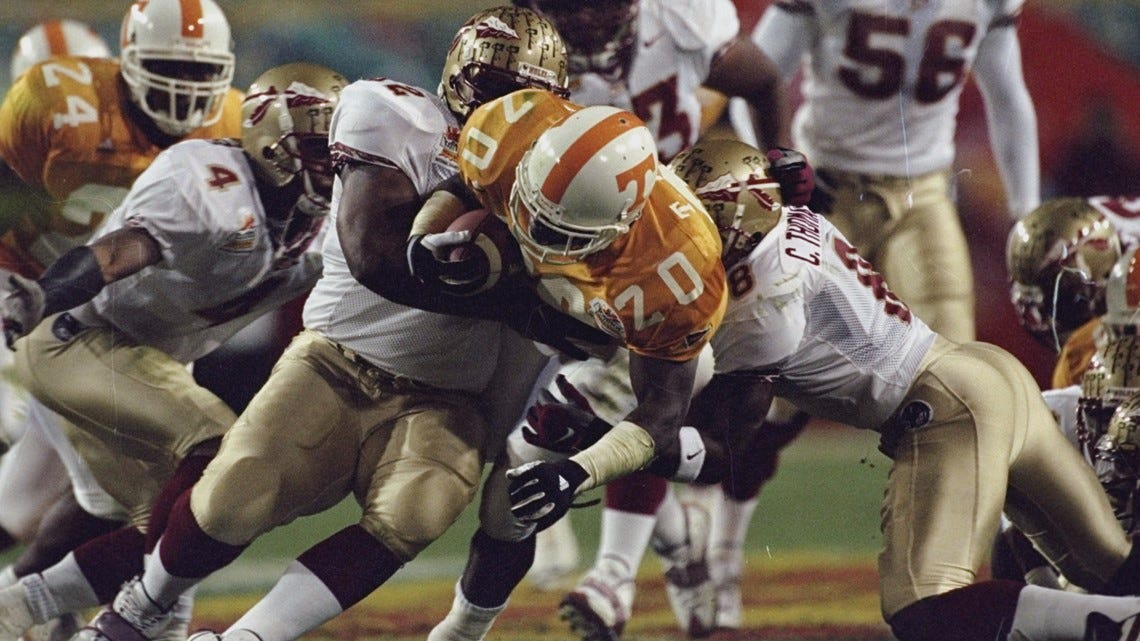
Since Tennessee’s title game triumph over Florida State in the 1999 Fiesta Bowl or the first-ever BCS Championship bout, the postseason culmination of college football has drawn a closer resemblance to the Super Bowl instead of something that was once similar to a board meeting.
For 15 years from 1998 to 2013, the BCS system did its job to perfection. The format effectively eliminated split championships by contractually forcing each member of the American Football Coaches Association to vote for the game’s victor as the sole unanimous champion at each season’s conclusion.
However, the system possessed one pivotal flaw — its massive reliance on computer selection methods often hindered the formulation of marquee contests. In the eyes of players, coaches, analysts, and fans, the 10-best teams that were awarded BCS Bowl bids at each campaign’s end didn’t always appear to be the best squads on paper or through the commonly issued “eye test.”

To limit computer-induced error, the initial iteration of the College Football Playoff (CFP) committee was first-formed on October 16, 2013 in efforts to phase out the BCS system. Less than a season later, the first four-team bracket-styled competition made its way into the college football landscape.
But, as innovative and new as the initial CFP system once was just under a decade ago, it is no longer on par with college football’s rapidly evolving structural overhaul.
Less than two weeks ago, the CFP board of managers unanimously voted to expand the postseason field from four to 12 teams, creating a six-game bracket set to give the top two seeds first-round byes, beginning in 2026.
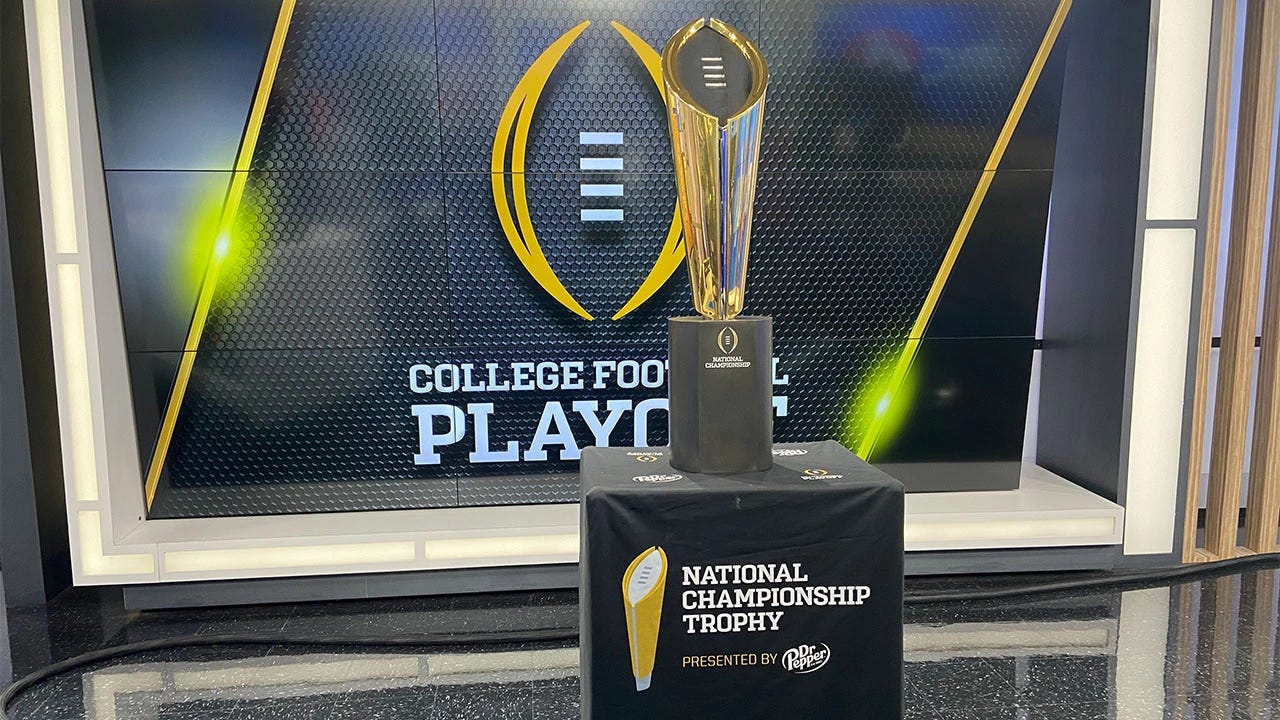
While the initial reaction from fan bases across the country echoed unparalleled excitement, I, unfortunately, struggled to carry a similar tune. In fact, I am extremely hesitant to buy into college football’s newly-enacted postseason structure for several reasons.
Although I do think a flurry of positives will ultimately stem from playoff expansion, there are a slew of potential downsides to consider when removing emphasis from college football’s weekly regular season slate.
Uniquely, college football is the only sport where every regular season game holds an equal amount of weight. In eight years since the playoff’s creation, zero two loss squads have been able to shake off a second fluke blunder to eventually sneak into the four-team dance.
Take Penn State in 2016, for example. The Nittany Lions started the year on a dismal 0-2 slide, highlighted by a 42-39 defeat at the hands of Pitt. Soon after, Penn State fell 49-10 against Michigan, which effectively put James Franklin’s squad out of the running for a national championship despite ending the campaign on a furious 8-0 crash course.

While people might argue, “Penn State deserved to make the playoff following season-defining victories over Ohio State and a conference championship triumph over Wisconsin,” the Nittany Lions proved that it takes another level of perfection to compete for arguably the toughest prize in American sports.
In my opinion, the level of difficulty, competition, and yearly pursuit of excellence is the differentiator between college football and the NFL, NBA, MLB, and other professional endeavors. “Load management” would never exist if individual, regular season losses could truly derail shots at achieving history.
On the same note, let’s take a look at a few household programs that are already almost entirely out of the running to receive playoff bids before the commencement of week three.
After taking Ohio State down to the wire to begin Marcus Freeman’s tenure in South Bend, Notre Dame just suffered a colossal loss to Marshall — in front of over 77,000 Fighting Irish faithful.
Imagine if the 12-team playoff existed and Notre Dame ended up running the table, which would feature victories No. 12 BYU, No. 5 Clemson, and No. 7 USC. Freeman’s squad would almost certainly earn an at-large bid into the quest for a championship.
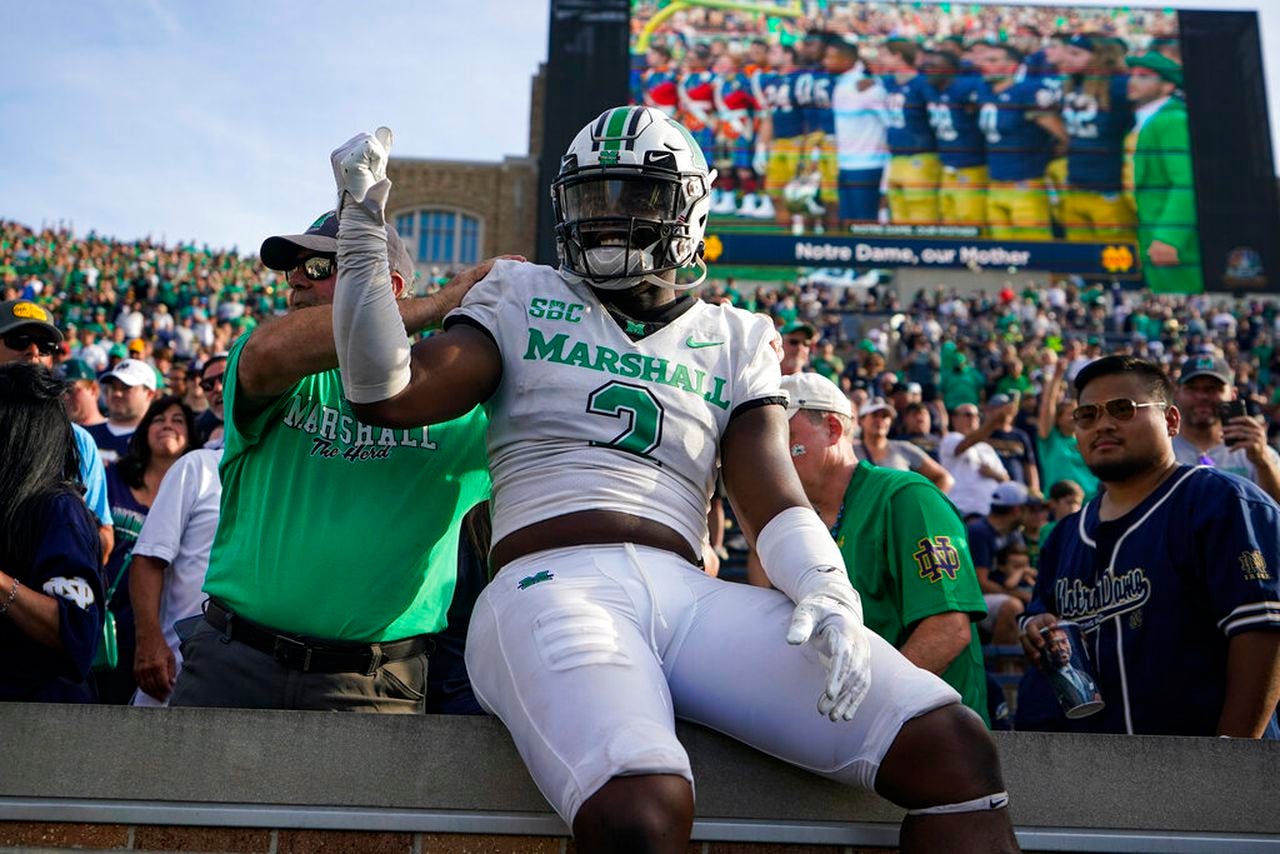
But, at that point, what significance would Marshall’s program-altering win have for its players and second-year head coach Charles Huff? Even with a 12-team setup, a program of Marshall’s caliber would never be able to earn an outside shot at competing among the nation’s top dogs.
However, with college football’s current structure, Huff and his senior class can forever say “We were a part of one of the biggest upsets in college football history, which effectively ended Notre Dame’s season.”
For most of the Thundering Herd roster, which likely won’t ever reach the NFL ranks, last Saturday’s upset will forever prevail as their most impressive team-led feat on the gridiron. With an expanded playoff format, that sentiment would never hold true if Notre Dame was still granted a spot in the postseason finale.
The same principle applies to Appalachian State — a program that entered the FBS ranks less than eight years ago. As nearly 20-point underdogs, the fired up Mountaineers held No. 6 Texas A&M to 186 yards offensively, highlighted by holding the Aggies to just over 18 total minutes of possession.
According to the 247Sports team talent composite, a service that tracks the amount of three, four, and five star prospects on each FBS roster, Texas A&M currently possesses the fourth-most talented bunch amongst 124 programs with 46 former four stars and 10 five star commodities.
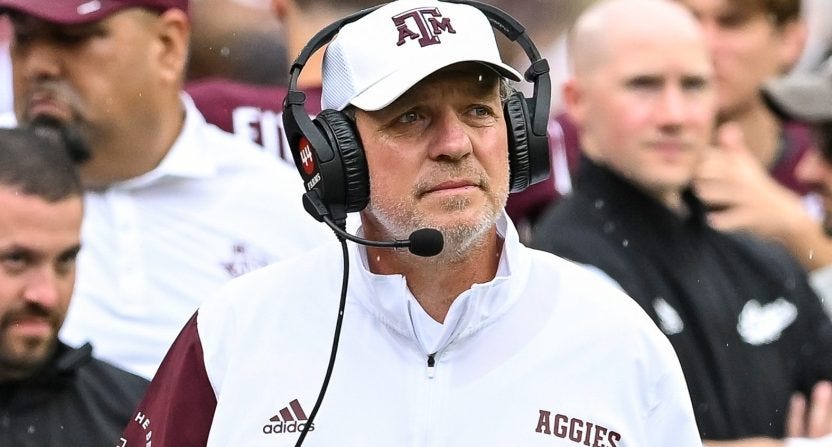
Unbelievably, the Mountaineers ousted Jimbo Fisher’s unit with just one four star prospect and 47 three star players. The rest of Appalachian State’s 85-man scholarship bunch entered the program as two-star or unrated products.
A loss of this magnitude should never have the ability to be diminished in a system that praises large, booster-backed programs that have the potential to win 10 or more games per campaign.
By maintaining a four-team playoff, Appalachian State would be appropriately celebrated for its unprecedented accomplishment, while Texas A&M would rightfully be excluded from all future playoff considerations for the given season.
Aside from a sheer competitive standpoint, there are many other factors to consider as a byproduct of playoff expansion that remain unaddressed by the committee. For example, how will student-athletes potentially manage a 17-game schedule?
Will players be compensated with postseason television revenue for an extended season at the mercy of big-time networks? Would players want to risk cashing in on millions of dollars for five extra games independent of the regular season? For many who were initially in favor of the playoff’s expansion, these factors seem to still be swept under the rug.
While six meaningful bowl games and postseason matchups on college campuses will prove to be must-watch events over time, I’m not certain that the benefits will fully be able to outweigh the costs.
So, what do you think about college football’s postseason future?
Will the regular season’s meaning lose its luster when two, or even three, loss teams can make their way into national championship contention? Or, will it be more interesting to include more variety in the field of 12?
Let me know in the comments below and on Twitter @AdamBreneman81!
Game of the Week — Holy Cross, 37 Buffalo, 31
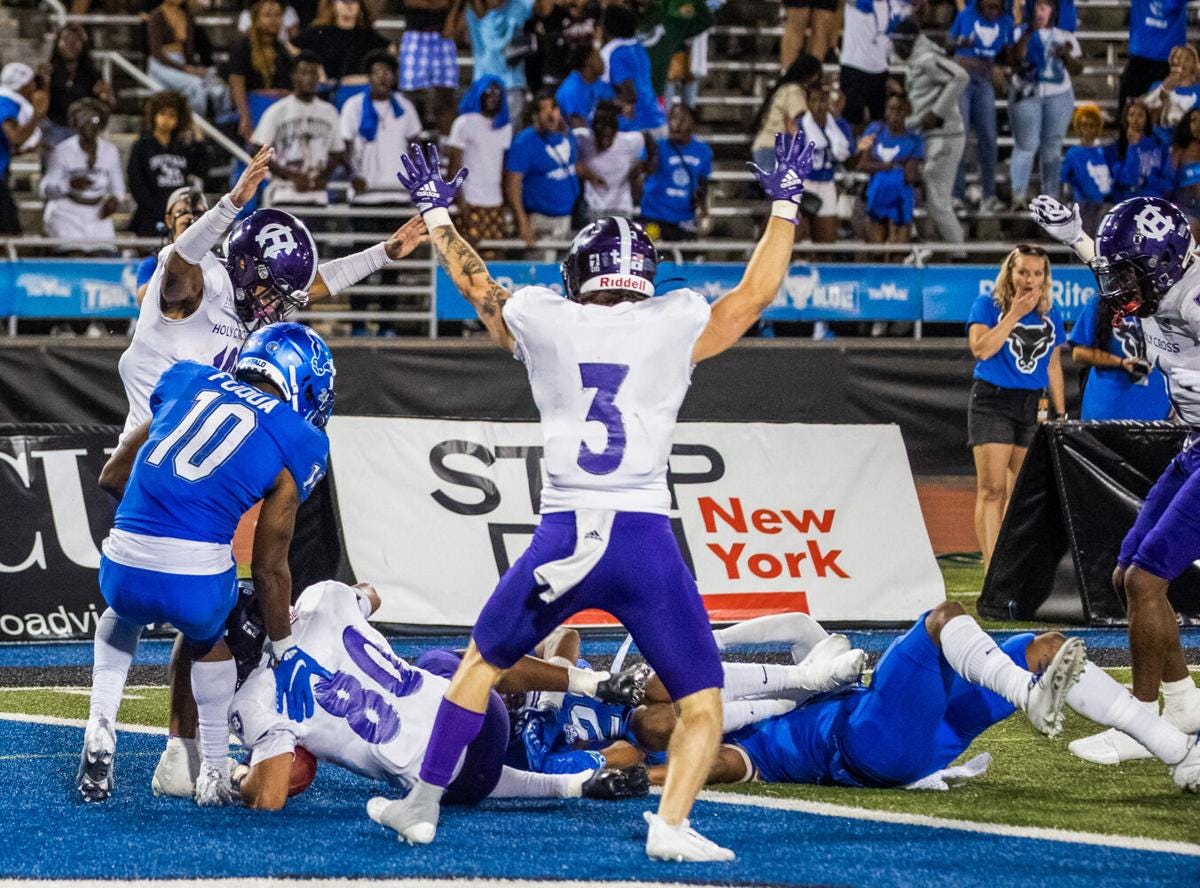
Although three three top-10 teams suffered shocking losses on Saturday, no matchup trumped the excitement behind Holy Cross’ last-second victory at the expense of Buffalo. Fortunately, I was lucky enough to receive the call for ESPN3’s broadcast of the contest.
After Buffalo stormed out to a commanding 14-0 lead early in the second quarter, the Crusaders’ explosive, pass-heavy system started to torch the Bulls’ second-level on a basis of consistency.
Right before entering the locker room at halftime, Holy Cross quarterback Matthew Sluka hit Ayir Asante on a 17-yard touchdown strike to cap off a seven play, 75-yard drive, cutting the deficit to just seven.
Then, a two-touchdown third quarter propelled the Crusaders to a 28-28 mark. In the span of five minutes, both Sluka and Buffalo’s signal caller Cole Synder traded touchdown tosses of over 60 yards a peice, leading to a combined output of 543 yards through the air.
Both teams traded a pair of clutch field goals down the stretch, but late play heroics from Holy Cross ultimately sealed the deal. As time expired, Sluka attempted a 46-yard hail mary try, which was hauled in by Jalen Coker for the game-winning score.
The victory sent the Crusaders to a promising 2-0 start, which slotted the squad atop of the Patriot League standings. This was college football at its finest, folks.
NEW Breneman Show Podcast with Auburn QB TJ Finley
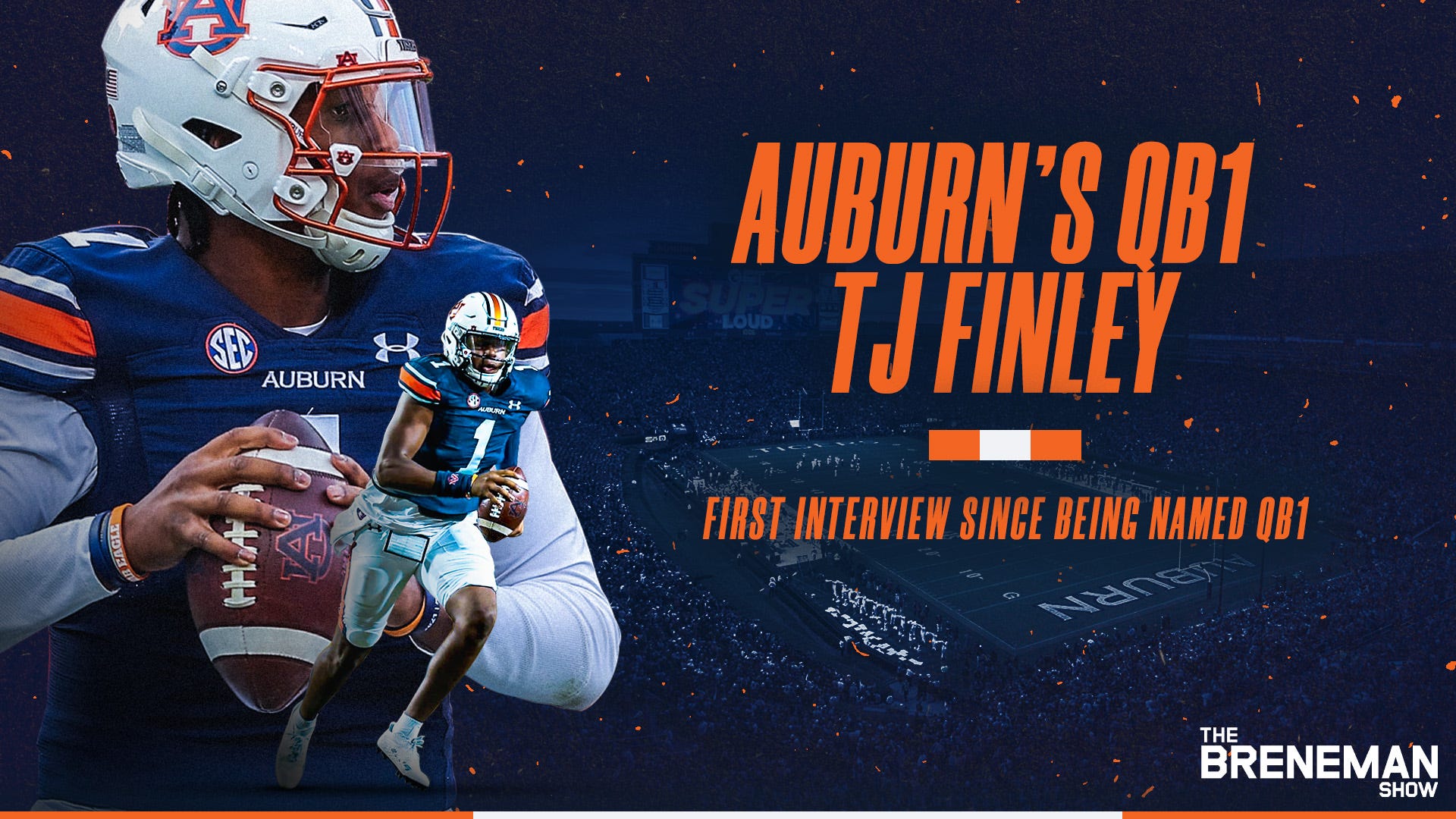
I had the chance to talk with TJ Finley for his very first interview since being named Auburn's starting quarterback. Appreciate TJ for opening up about a lot of topics. Excited to watch him this year!
Watch, subscribe, comment and like below.
If you have any questions, comments, or feedback, please don’t hesitate to reach out to me by email at adam@brenemanmedia.com.
You can also find me on Twitter, Instagram, TikTok, LinkedIn or Facebook.
Shoutout to Connor Krause for helping to write this newsletter and putting the whole thing together!